Contacts Snieguolė ŽIŪKAITĖ Justė RADZEVIČIŪTĖ-LAUGALIENĖ
| NATO PA: Science and Technology Committee focuses on energy security, missile defence and threats in cyber space
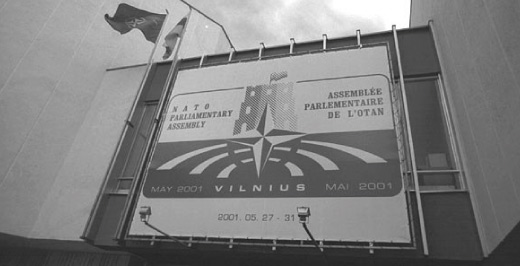
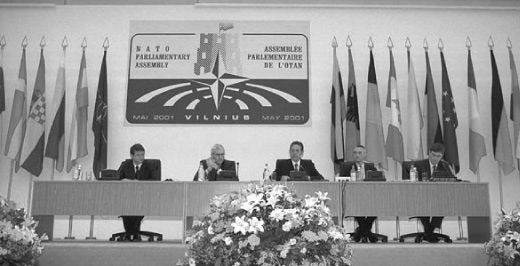
On Saturday, 31 May, the Spring Session of the NATO Parliamentary Assembly (NATO PA) continued in the Seimas. The Science and Technology Committee discussed European energy security, strengthening of missile defences, strategies for cyber space security, and defence prospects.
Energy security: Europe urgently needs to look for new energy sources
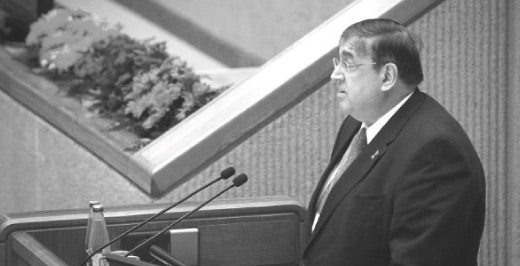
Jaroslav Neverovič, Minister of Energy of the Republic of Lithuania, was the first to speak at the Committee meeting. He discussed in greater detail one of the most relevant issues, i.e. the energy security situation in Europe and what measures are taken or what additional measures must be taken at national, regional, European and NATO levels. “In terms of energy security, the European continent and European states are in a fairly unique situation. As one of the largest markets, Europe faces fragmentation, lack of competition, dependence on imports, and security of energy supply. Only a few European states have their own energy sources or are able to secure them,” highlighted Jaroslav Neverovič.
The Minister of Energy drew attention to the current crisis in Ukraine that causes great concern to EU countries because “about half of natural gas they need is imported from Russia via Ukraine.” “Unless Ukraine and Russia agree on the gas price and gas debt payment, Russia can cut off gas supply to Ukraine even tomorrow. Therefore, concern about the possible cut-off of gas supply is high, and there is a real risk that gas storage facilities in Ukraine will not accumulate enough gas for the coming winter, which may have consequences for gas supply to the countries in Central and Eastern Europe,” said Mr Neverovič. He concluded by saying that increasing energy security in Europe is the common goal of all assembled at the Spring Session of the NATO Parliamentary Assembly in Vilnius. In order to increase energy security, use must be made of various formats and instruments, national and European, or the possibilities provided by NATO. Osman Aşkin Bak, Member of the Grand National Assembly of Turkey and the Sub-Committee on Energy and Environmental Security, presented the draft report on European Energy Security: The Southern Gas Corridor. The rapporteur noted that energy security, and security of natural gas supplies in particular, is one of the most pressing concerns in both Europe and the entire Euro-Atlantic area. While Europe is getting even more dependent on gas imports, it is vital to secure reliable supply of natural gas. “It is especially important to talk about the European energy security in the context of the NATO PA. After all, the Parliamentary Assembly brings together legislators from different countries that need to cooperate in order to improve energy security in Europe,” said Osman Aşkin Bak. He noted that Europe must focus on diversifying gas routes and suppliers. The EU should cooperate more actively with third states and aim more actively at the access to new gas sources. “It has to ensure all interconnections in its territory. The USA and Canada can contribute to solving the problem of energy security: both countries must increase gas and oil exports to Europe,” stated Mr Bak. The rapporteur underlined that the central problem of European energy security is its overdependence on a limited number of natural gas suppliers: “Many European states are fully or overwhelmingly dependent on a single supplier. The natural gas crises between Russia and Ukraine over the last decade clearly illustrated Europe’s overdependence on existing suppliers.”
Missile defences: transparency and mutual co-operation are most important
Presenting the draft general report The Global Spread of Ballistic Missile Defences, Stephen Gilbert, Member of the House of Commons of the United Kingdom of Great Britain and Northern Ireland, highlighted that the threat from ballistic missiles is growing across the globe. More than 30 states possess ballistic missiles or have programmes to develop or procure them. An ever increasing number of countries are in the process of acquiring this weapon. According to Mr Gilbert, the biggest worry is that some of these missiles could be adapted to carry warheads housing weapons of mass destruction.
No clear consensus exists whether or in what circumstances the deployment of ballistic missile defence systems has a destabilizing or stabilizing effect on regional and international security. States seeking ballistic missile defence systems primarily do so because they believe such systems will, at best, stabilize their deterrence postures, and, at worst, limit the damage caused by an attack; whereas others believe highly capable and prolific ballistic missile systems undermine mutual deterrence, strategic arms reduction, and non-proliferation initiatives. “There are also those who criticise missile defence systems. They think that such systems can cause security problems. Established nuclear powers may consider that such systems undermine their strategic positions. They would also like to have a possibility to retaliate with a counter-attack,” noted the rapporteur. “I would not decide on which side is right about defence systems. However, there are states that critically see them, Russia being one of them.” Trying to answer the question how to increase the confidence in missile defence systems, Stephen Gilbert argued that states should increase transparency and strive for closer co-operation on ballistic missile defence. However, the rapporteur said that transparency and co-operation must be mutual. “NATO is taking particularly this way. From the very beginning, we tried to show Russia that NATO missile defences are not directed against Russia’s strategic nuclear arsenal. They are designed to counter a limited amount of attacks from hostile players. However, Moscow continues to be sceptical about these systems. NATO must remain transparent in its relations with Russia and seek cooperation. Such a policy would also deprive Moscow of the pretext for building weapons targeting the Alliance and increasing their number,” said Mr Gilbert.
Cyber Space Security: threats will get only greater
Philippe Vitel, Member of the French National Assembly of the Republic, presented the special report Cyber Space and Euro-Atlantic Security that examines those threats that can directly undermine national security and thus require national and international defence efforts. According to him, offensive cyber programmes sponsored by governments remain the greatest worry for national security. It was highlighted that in recent years the frequency of cyber intrusions in the military and energy sectors has risen dramatically, and these sectors can be very vulnerable because of growing dependence on information systems. According to the rapporteur, an attack against any NATO country is felt by the entire Alliance. The country attacked, first of all, imposes national countermeasures domestically. However, closer international cooperation within the framework of NATO and the EU can have a significant value. “NATO, EU and national strategies need to be co-ordinated closely, to avoid duplication of efforts, but also because it is indeed difficult to co-ordinate strategy on an issue that often transcends national and regional borders,” stated Mr Vitel. Concluding his presentation, he added: “It can be hardly expected that cyber threats will disappear in the near future. It is more likely that they get only greater.” Mark Hibbs, Senior Associate, Nuclear Policy Program, Carnegie Endowment for International Peace, Berlin, talked on The Iranian Nuclear Programme, and Paula de Sutter, Consultant, Tenere’ Veritas; former Assistant Secretary for Verification, Compliance, and Implementation, US Department of State, briefed on Euro-Atlantic Arms Control in Light of Deteriorating Relations with Russia.
Please find more on the NATO PA and the Spring Session here: www.lrs.lt/lt2014nato-pa. Monika Kutkaitytė, Public Relations Unit, Communications Department, Office of the Seimas, tel. +370 5 239 6666, e-mail: [email protected] |




|
|
|
|